The Illusion of Choice
Three or four parties. A rulebook we did not write, in a language we were never taught. When did the illusion of choice become the shape of freedom?
A political reckoning — not science fiction
What if the exhaustion is the point? Election on Mars traces how modern democracies wear you down until you stop asking — and imagines what it might look like to start again.
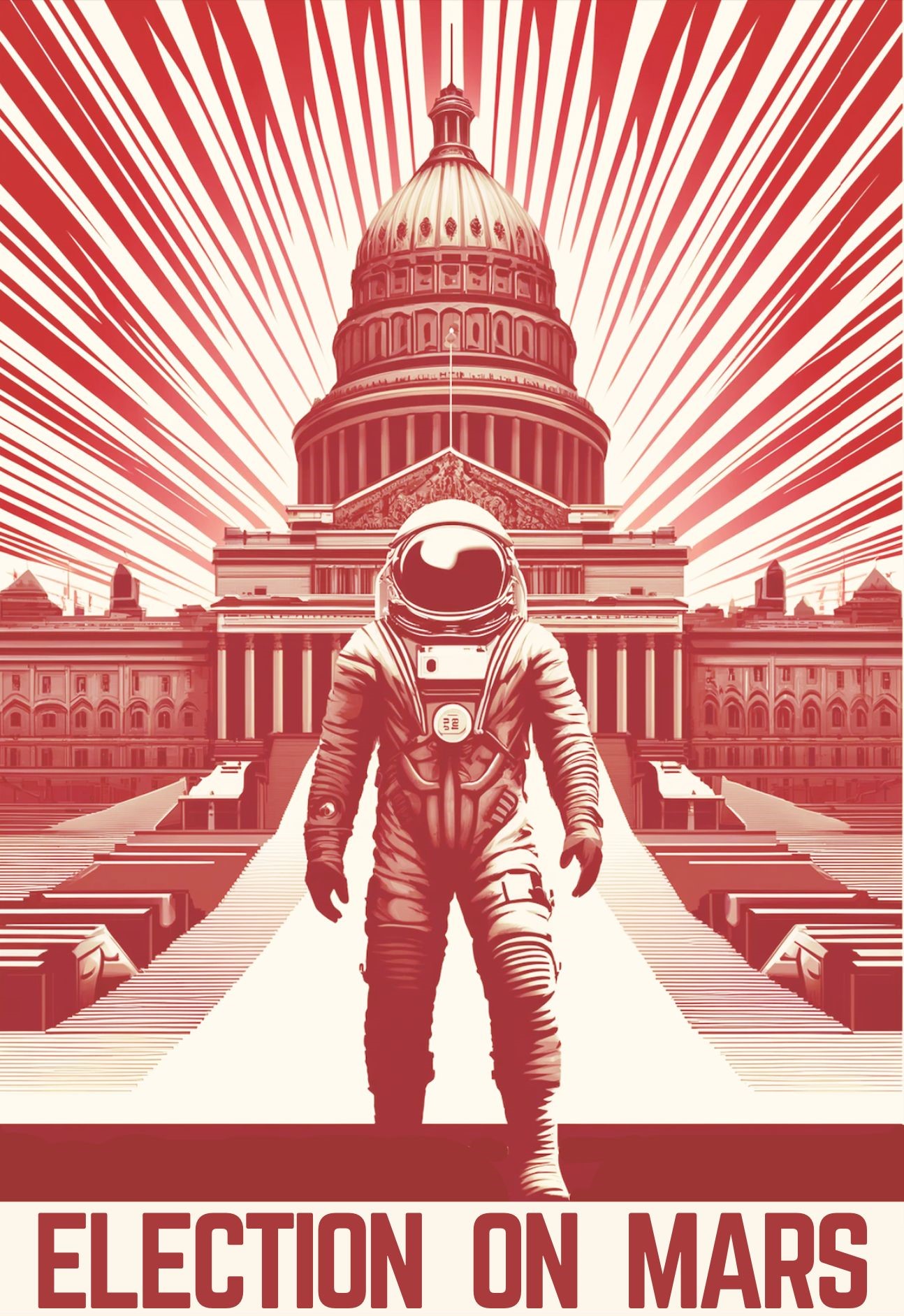
Chapter I — Diagnosis
Three or four parties. A rulebook we did not write, in a language we were never taught. When did the illusion of choice become the shape of freedom?
Merit is our favorite story. But if the ladder tilts before we ever place a foot on it, whose life are we actually living — ours, or the one arranged for us?
The street is a last address. If a citizen must raise their voice there to be heard, something quiet upstream has already given way.
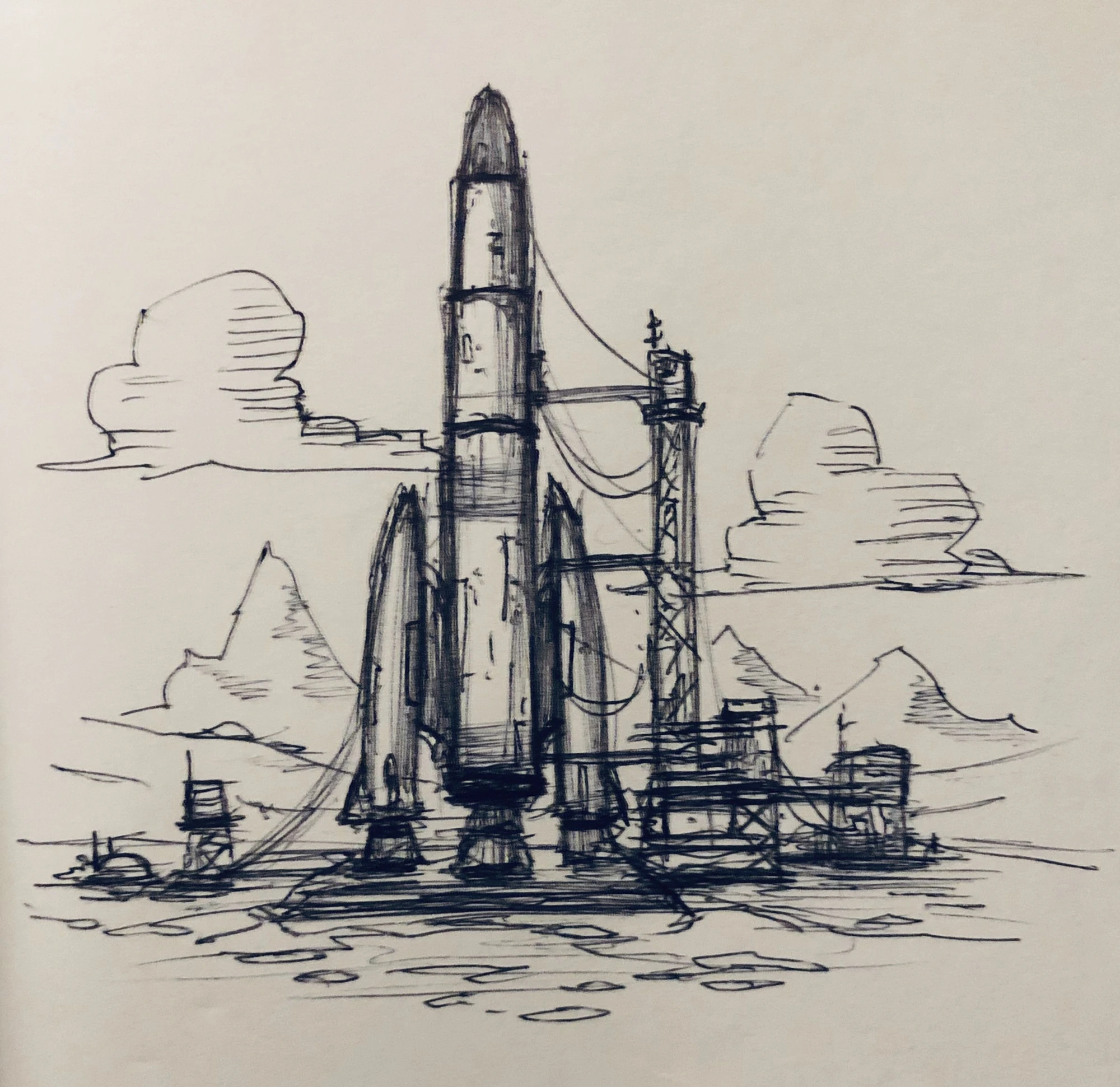
Fig. II — Departure from Earth
Chapter II — The Premise
Following a protagonist’s journey to a Martian colony, Election on Mars holds our political architecture at arm’s length — the promises, the erosions, and the small daily fictions we’re taught to accept without noticing.
By staging a rigged electoral contest on another planet, the novel poses a question we rarely ask on this one: if we were writing the social contract today, from scratch, would we still sign the one we’ve inherited?
Early Praise
“A thought-provoking science fiction novel that explores an alternate political system suited for life on Mars. The author's mature perspective challenges conventional governance and sparks deep reflection on humanity's future beyond Earth.”
“A thought-provoking debut from an author with great potential. The short but crisp story uses sci-fi as a tool to imagine an alternative political system — the commentary on our democratic systems and the reimagining of them is what really lies at the centre of this book.”
“There is something unique about the ideas presented in the book. It makes you rethink the future of politics and society — a great read for anyone eager to explore where humanity might govern itself next.”
“It reminded me of the joy I experienced years ago reading Satyajit Ray's Professor Shanku — though less whimsical, it reignited my love for the genre. After years of mainstream sci-fi, Election on Mars feels refreshing.”
“A thought-provoking science fiction novel that explores an alternate political system suited for life on Mars. The author's mature perspective challenges conventional governance and sparks deep reflection on humanity's future beyond Earth.”
“A thought-provoking debut from an author with great potential. The short but crisp story uses sci-fi as a tool to imagine an alternative political system — the commentary on our democratic systems and the reimagining of them is what really lies at the centre of this book.”
“There is something unique about the ideas presented in the book. It makes you rethink the future of politics and society — a great read for anyone eager to explore where humanity might govern itself next.”
“It reminded me of the joy I experienced years ago reading Satyajit Ray's Professor Shanku — though less whimsical, it reignited my love for the genre. After years of mainstream sci-fi, Election on Mars feels refreshing.”
Read the Prologue
A few paragraphs, right here. No downloads, no ceremony — just the opening argument.
Humans: we are all so different, so unique in our own ways. Each person lives a different life in a world of their own. But when you widen the lens and view from another part of the universe, it's just us as a whole — humanity, a life found only on Earth and soon on other planets. Humanity has come so far by breaking itself into numerous parts, with each part contributing to its advancement, much like the human body.
Through billions of years of collective consciousness, of the living and the dead, humanity has grown, akin to the roots of a tree, with each generation deepening its existence. One way to help this process has been governance. A small part of humanity takes charge and directs the rest. The idea is excellent — a small group with the responsibility to aid the rest, ultimately expanding our collective existence.
— Election on Mars, Chapter VI
Amplify the Rebellion
Ideas move person to person. If this made you think, send it to someone who still argues in good faith.
The Rebellion Starts Here
A short book, but the kind you close with an argument still running in your head. Take it home, sit with it, disagree freely.